





























Articles
The close relationship between periodontal disease and tobacco
 send
There are various factors that can lead to periodontal disease. This time, we will introduce one of them, smoking. Please use this as a reference.
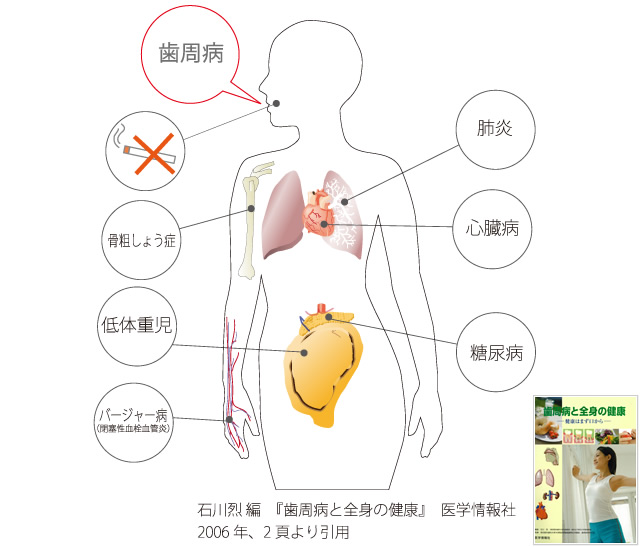
Tobacco is a major risk factor!
Smoking is a big risk factor for periodontal disease, and is said to be the leading risk factor. Smokers are more likely to develop periodontal disease and it progresses faster than non-smokers. It is also known that it is harder to cure even with treatment. There are three main reasons for this:
- Poor blood circulation in the gums results in insufficient oxygen and nutrients reaching the gums.
- The resistance of the gums is weakened, the function of white blood cells that fight bacteria is halved, and the immune system is weakened.
- Suppresses saliva production, making it easier for plaque and tartar to build up
Effects of Nicotine
The nicotine contained in tobacco not only reduces blood flow to the gums, preventing them from receiving enough oxygen and nutrients, but also suppresses saliva secretion, making it easier for plaque and tartar to build up on your teeth.
decreased immunity
Smoking weakens the immune system by reducing the function of white blood cells in fighting bacteria by half.
Summary
Research has shown that smokers are more susceptible to periodontal disease than non-smokers, their periodontal disease progresses more quickly, and their condition tends to be more difficult to treat even with periodontal treatment. Therefore, since smokers are more likely than non-smokers to have no improvement in their periodontal disease, we recommend that you start by quitting smoking if you are going to focus on treatment.
Periodontal disease is now a national disease, with 3% of Japanese people said to be infected. If you are reading this article, you may also have periodontal disease. Why not go for a regular checkup at the dentist? Even if you do not have periodontal disease, regular checkups and cleanings every three months will help you with preventive dentistry.